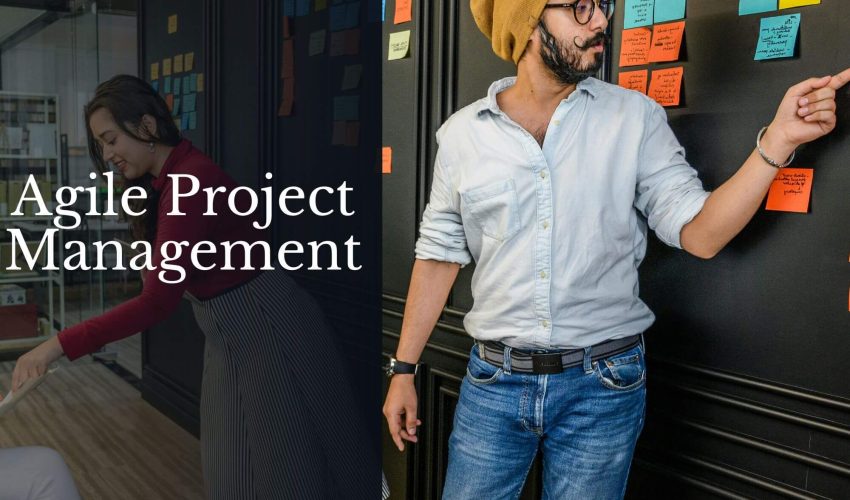
Agile Project Management
Get unlimited access to all learning content and premium assets Membership Pro
agile it project management is not about making work “faster” by tossing sticky notes on a wall and hoping discipline appears. It is about changing how you plan, deliver, inspect, and adapt when requirements are messy, stakeholders shift direction, and a rigid command-and-control approach starts breaking down. That is the exact problem I built this course to solve. If you need a practical way to manage work in smaller, testable pieces without losing control of scope, communication, or outcomes, this course gives you the thinking and the structure to do it well.
Why agile it project management matters when projects stop behaving
Most project failures do not begin with a dramatic mistake. They begin with a plan that assumed too much. A business sponsor changes a requirement after the schedule is already locked. A development team uncovers a dependency no one documented. A user finally sees the product and says, “That’s not really what we needed.” Traditional project planning can handle stable work very well, but it struggles when uncertainty is built into the job. That is where agile it project management becomes useful in a very real, very practical way.
What Agile gives you is not magic. It gives you a disciplined way to reduce risk early, learn sooner, and make better decisions with the information you actually have. Instead of waiting until the end of a long delivery cycle to discover whether you built the right thing, you check direction continuously. You shorten feedback loops, expose problems earlier, and give the team more room to adjust without losing control.
I want you to understand this point clearly: Agile is not chaos, and it is not the absence of planning. It is a different kind of planning. You still define goals, manage stakeholders, track progress, and make tradeoffs. The difference is that you do those things in short cycles with regular inspection. That makes it especially useful in software delivery, but the same logic works in process improvement, product work, marketing, operations, and any environment where priorities change faster than a long-term plan can absorb.
- Use short planning cycles to reduce risk before it grows expensive.
- Respond to change without losing project direction.
- Improve delivery by making feedback part of the work, not an afterthought.
- Keep the team focused on outcomes instead of paperwork.
If you are comparing this with broader business management, here is the distinction that matters: business management covers strategy, operations, and ongoing organizational control; project management is about delivering a defined result. Agile helps you deliver that result with more adaptability and less waste. That is the real value.
What you learn in this agile project management training
This agile project management training is designed to teach you how Agile actually works in practice, not just how to repeat the vocabulary. You will learn the Agile Manifesto and the principles behind it, because if you do not understand the values, the methods become empty rituals. I have seen teams hold daily meetings, create boards, and call themselves Agile while still making all the classic mistakes of a waterfall environment. The labels change; the behavior does not. That is why I start with the ideas first.
You will also learn the lifecycle of an Agile project, key roles and responsibilities, Scrum fundamentals, iterative delivery, and the communication habits that make Agile work in the real world. The goal is to help you recognize where Agile adds discipline, where it demands transparency, and where teams often misuse it. You will understand how planning happens in smaller increments, how priorities are managed, and how the team inspects progress without turning every conversation into a status meeting.
Another important part of the course is learning what Agile is not. That matters more than most students expect. Agile is not “do whatever you want.” It is not “skip documentation.” It is not “the customer can change everything at any time with no cost.” Those misunderstandings create predictable problems: scope creep, weak accountability, and frustrated teams. Good Agile practice has boundaries, and this course helps you see where those boundaries belong.
If you are looking for an agile fundamentals course that gives you a strong base, this one is built for that purpose. It is also useful if you want agile management training that connects theory to day-to-day project behavior. I focus on the judgment behind the method, because that is what separates someone who knows the terms from someone who can actually lead work.
How Agile changes the way teams plan, deliver, and learn
One of the hardest habits to break is the belief that planning happens once at the beginning. In agile it project management, planning is continuous. You still set direction, but you revisit it often. That is not indecision; it is responsible management in environments where new information appears all the time. A good Agile team does not cling to a bad plan just because it was approved in a meeting. It learns, adjusts, and keeps moving.
That change affects everything: how you manage scope, how you define work, how you communicate with stakeholders, and how you measure progress. You begin to think in increments instead of giant deliverables. You learn to separate the most valuable work from the least urgent work. You also become much more aware of the difference between “busy” and “effective.” That distinction is a lifesaver when teams are under pressure and everyone wants the project to look productive instead of actually being productive.
In this course, I emphasize the practical habits that support Agile delivery. That includes setting realistic expectations, keeping work visible, using iterative feedback to improve quality, and making sure people know what success looks like at each step. These are not soft skills in the fluffy sense. They are operational skills. If they are weak, Agile falls apart quickly.
Agile succeeds when teams make learning part of the workflow. If feedback only arrives at the end, you are not really doing Agile — you are just moving faster toward the wrong answer.
You will also see how Agile improves collaboration across roles. The point is not to make everyone do the same job. The point is to create a shared rhythm of planning, delivery, and review so decisions are made with better information and fewer surprises.
Core concepts, roles, and methods you need to know
A strong agile project management course online should help you understand the language of the framework without trapping you in jargon. That is what I aim to do here. You will learn how the Agile Manifesto shapes priorities, why individuals and interactions matter, and how working solutions, customer collaboration, and response to change influence the team’s behavior. Those ideas sound simple, but they become powerful when you apply them consistently.
You will also learn the major roles involved in Agile work. Those roles matter because confusion around responsibility is one of the fastest ways to slow a project down. Teams that do not understand who owns priorities, who facilitates work, and who is accountable for delivery tend to drift. Agile does not remove accountability; it makes it more visible.
Scrum fundamentals are part of that foundation as well. You will get comfortable with the cadence of planning, execution, review, and improvement, and you will understand why these events exist in the first place. They are not meetings for the sake of meetings. They are mechanisms for managing uncertainty. Used well, they keep the project honest.
Depending on the organization, you may also encounter iterative methods beyond Scrum. The important lesson is not memorizing every label. It is learning how to choose a delivery style that supports collaboration, inspection, and adaptation. When students ask me what to focus on first, I tell them this: understand the principles, the roles, and the cadence. The rest becomes much easier to absorb.
- Agile values and principles
- Scrum roles, events, and artifacts
- Iterative planning and incremental delivery
- Visibility, feedback, and continuous improvement
- How to avoid “Agile in name only”
Using Agile in real workplace scenarios, not just diagrams
Real projects are rarely neat. Requirements shift, stakeholders disagree, technical risks show up late, and teams are asked to deliver more with fewer resources. That is why I keep this course grounded in workplace reality. You need to know what to do when the theory meets deadlines, politics, and imperfect information.
Imagine a team building an internal software tool. At first, leadership wants a simple workflow tracker. Midway through the project, operations wants reporting, compliance wants an audit trail, and the product owner wants user-role controls. A traditional approach may try to lock everything down and then absorb the pain later. An Agile approach lets you sort priorities, deliver the highest-value pieces first, and keep the team aligned through frequent inspection.
This is also where agile test case management becomes relevant. Testing in Agile is not something you delay until the end of development. It needs to stay close to the work so that defects are found while context is still fresh. You do not need to become a tester to understand this, but you do need to appreciate why test cases, acceptance criteria, and feedback loops matter so much in iterative delivery. If the team cannot verify quality as it goes, the project starts collecting risk silently.
The same logic applies to communication. Agile works best when people know what is being built, why it matters, and what decisions are pending. That level of clarity prevents the classic trap of false confidence. A project can look healthy in a spreadsheet and still be failing in reality. Agile is designed to expose that gap early.
Who benefits most from this agile management training
This agile management training is for you if you need a stronger understanding of how to lead or support projects that change direction frequently. It is especially valuable if you work in IT, because technical work tends to be full of dependencies, unknowns, and fast-moving priorities. But it is not limited to developers or technical leads. I have seen project coordinators, business analysts, team leads, product people, and even managers outside of IT benefit from a solid Agile foundation.
If you are new to project management, this course gives you a practical entry point. If you already know traditional project management, it helps you adapt that knowledge to iterative delivery. If you work alongside Agile teams but have never been taught the method properly, this course gives you the vocabulary and the discipline to participate more effectively. And if you are preparing for certification, it gives you the conceptual base you need before you start drilling into exam-specific details.
The course is also useful if you are trying to reposition your career. Employers increasingly want people who can manage ambiguity without creating confusion. That is a very specific skill, and it shows up in job descriptions for project coordinators, junior project managers, Scrum team support roles, delivery leads, and hybrid IT management positions. Even if the title does not say “Agile,” the work often does.
For students thinking about career value, it is worth noting that entry-level project roles vary widely by region and organization. In many markets, people researching CAPM project management salary ranges are looking at a path into project coordination, junior PM roles, and team support roles before moving into more senior responsibilities. Agile knowledge can strengthen that path because it helps you communicate in the language many modern teams already use.
Career impact, salary expectations, and professional momentum
Let’s talk plainly about career impact. Learning Agile will not magically make you a senior project manager, but it can absolutely make you more useful in the kinds of environments employers hire for now. If you can explain how to break work into increments, prioritize with stakeholders, and keep delivery visible, you become easier to trust on real teams. That matters when managers are deciding whom to place on a project with moving parts.
Agile knowledge supports roles such as project coordinator, junior project manager, business analyst, delivery lead, Scrum team member, and IT team lead. It also strengthens your case if you are moving from technical support, QA, operations, or product work into a more structured delivery role. People often underestimate how much career growth comes from being the person who can keep a project from drifting.
Salary depends heavily on location, experience, and industry, so I never pretend there is a single number that fits everyone. But as a practical matter, people comparing entry-level project paths often look at CAPM project management salary expectations as a benchmark for early career project work. Agile competence can improve your prospects because employers value candidates who can contribute immediately in collaborative, iterative environments.
If you are aiming at long-term growth, Agile is not the destination; it is a skill set that helps you get to the next role and perform better once you are there. The professionals who stand out are usually the ones who can balance discipline with flexibility. That is exactly what this course is meant to build.
Prerequisites, preparation, and how to get the most from the course
You do not need to be a project veteran before starting this course. A willingness to think differently about planning and delivery matters more than prior experience. That said, you will get more out of the material if you already understand basic workplace terms like scope, schedule, stakeholders, risks, and deliverables. If those words are familiar, you are in good shape.
I designed this course so you can learn it at your own pace and return to sections when the concepts need another pass. That is one of the advantages of self-paced study: you do not have to keep up with a live class schedule while trying to absorb a new way of working. Take notes. Pause often. Compare the ideas to projects you have actually seen. The more concrete your examples, the faster the lessons will stick.
When you study, keep asking yourself how Agile would change the way a team behaves in your environment. Would planning happen in shorter cycles? Would stakeholders review progress more often? Would testing happen closer to delivery? Would priorities be easier to renegotiate? Those questions turn the course from theory into judgment, and judgment is what employers care about.
- Learn the principles before memorizing the terms.
- Connect each concept to a real project you know.
- Notice where your current workplace uses Agile behavior already.
- Pay attention to communication, not just process.
- Focus on adaptability without losing accountability.
If you are coming from a more traditional background, one of the most useful habits is to stop asking whether Agile is “better” in the abstract and start asking where it fits. That is how experienced professionals think. They do not chase methods; they choose the right approach for the work.
Why this agile project management course online is worth your time
There are a lot of courses that teach Agile as a set of terms. I do not think that is enough. You need to understand how Agile changes the shape of work, how it affects team behavior, and where it breaks when people misuse it. That is why this agile project management course online focuses on practical understanding, not performative familiarity.
By the time you finish, you should be able to explain Agile clearly, recognize Scrum fundamentals, understand iterative delivery, and see how Agile supports real project control rather than undermining it. You should also be able to spot the difference between a healthy Agile practice and a team that is using the language without the discipline. That distinction matters in interviews, in meetings, and in day-to-day work.
If your goal is better project delivery, stronger career positioning, or a more confident path into certification study, this course gives you the foundation. If your goal is simply to survive a workplace that expects everyone to “be Agile” without teaching them what that means, it gives you something even more important: clarity.
The best Agile teams are not the fastest teams. They are the teams that learn faster, decide better, and waste less time pretending uncertainty will go away on its own.
CompTIA® and A+™ are trademarks of CompTIA. Cisco® and CCNA™ are trademarks of Cisco. Microsoft® is a trademark of Microsoft. AWS® is a trademark of Amazon Web Services, Inc. EC-Council® and CEH™ are trademarks of EC-Council. ISC2® and CISSP® are trademarks of ISC2. ISACA® is a trademark of ISACA. PMI® and PMP® are trademarks of Project Management Institute. This content is for educational purposes.
- 10 Sections
- 0 Lessons
- 4 Weeks
- Module 1 – What Is Agile0
- Module 2 – Projects And Project Management In An Agile World0
- Module 3 – Agile And Scrum0
- Module 4 – Common Scrum Terminology0
- Module 5 – Other Iterative Methods0
- Module 6 – Using Agile Outside Software Development0
- Module 7 – Using Agile Outside Software Development0
- Module 8 – Case Studies Of Transitioning To Agile0
- Module 9 – Critique Of Agile0
- Module 10 – Review Of Agile0

Get unlimited access to all learning content and premium assets Membership Pro
Buy this course in package
You might be interested in
-
All levels

-
All levels

-
All levels

-
451 Students
-
0 Lessons
-
4 Weeks
-
All levels

-
669 Students
-
0 Lessons
-
4 Weeks